
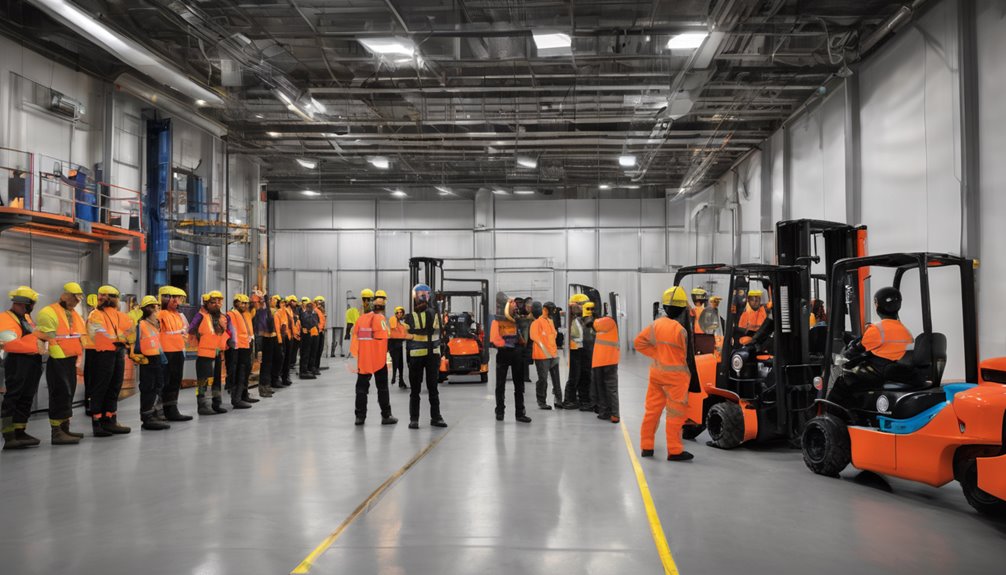
Forklift training in the UK usually costs between £150 and £250 for beginners, though prices can vary depending on course type, equipment, and location. We’ll also find that refresher courses are more affordable, while advanced or specialist training can exceed this range. Accredited certification is key for compliance and workplace safety, and some funding or subsidies might be available. Getting the right training not only keeps us safe, but guarantees we meet regulatory standards—there’s more to take into account for the best value.
Key Takeaways
- Basic forklift training courses in the UK typically cost between £150 and £250 per participant.
- Refresher courses are less expensive, while advanced or specialized equipment training can exceed £350.
- Course type, duration, location, and equipment specialization directly affect overall training costs.
- On-site training may reduce travel costs but can include premium fees; funding options exist for job seekers and apprentices.
- Accredited training ensures legal compliance, covers theory and practical assessments, and includes certification upon successful completion.
Typical Forklift Training Costs in the UK
When evaluating forklift training in the UK, you’ll typically find that course costs vary based on factors such as course length, accreditation, and location. Most reputable providers align their pricing with industry standards to guarantee both quality instruction and regulatory compliance. We often see basic forklift training starting at around £150 to £250 for a novice course, while refresher courses may cost slightly less. Accredited training that meets strict industry standards can command higher fees, but it also ensures certification validity—critical for workplace safety and legal accountability. By choosing providers who uphold the highest standards, we empower ourselves and our teams to operate confidently and safely. In the end, investing in proper training isn’t just a compliance exercise—it’s a proactive step toward workplace freedom and risk mitigation. Training often includes pre-operational safety checks, which are vital for hazard identification and ensuring safe operation.
What Affects the Price of Forklift Certification?
When we look at forklift certification costs, we need to contemplate both the course type and its duration, as these directly impact compliance and skill requirements. Training location costs can also vary, influencing our total investment and operational risk. Let’s examine how these factors shape the overall price and our obligations.
Additionally, selecting a specific forklift type for training, such as counterbalance or reach trucks, can affect the cost due to varying complexity and resource needs.
Course Type and Duration
Since the type and duration of a forklift training course directly influence certification costs, it’s essential to understand what these variables mean for your investment. We must consider that different course formats—such as beginner, refresher, or advanced—carry distinct price tags, depending on the intensity and depth of instruction. Certification levels also matter; higher qualifications demand more extensive training, impacting the total expense. Duration is another key factor: longer, in-depth courses generally cost more but offer greater regulatory compliance and safety assurance. By weighing these variables, we can make educated choices that protect both our safety and financial freedom. Avoid costly compliance errors by choosing the right certification level. Gain confidence with a customized course format. Shorter courses may save money, but at what risk? Secure long-term safety for your team. Invest in knowledge that liberates your potential. Additionally, the Certificate of Competence enhances career opportunities by providing formal recognition of skills in lift truck operation.
Training Location Costs
Beyond course type and duration, where we choose to complete forklift training can considerably affect certification costs. If we opt for on-site training at our own workplace, we may benefit from reduced travel expenses and minimal disruption to operations, but providers often charge a premium for this convenience. Conversely, attending training at a dedicated centre could lower costs but might introduce travel and accommodation needs, depending on location. Online training offers the greatest location flexibility and can reduce costs further, though we must guarantee it meets regulatory requirements for practical assessment. By carefully weighing location options, we can manage risk, maintain compliance, and maximise our budget. In the end, location flexibility gives us more control over both our learning experience and the total investment required for certification. Additionally, courses that include safety codes and truck stability may provide added value by ensuring comprehensive safety training.
Comparing Beginner, Refresher, and Advanced Training Prices
Although each forklift training course serves a distinct purpose, understanding the cost differences between beginner, refresher, and advanced options is vital for compliance and budgeting. When we look at beginner options, the price often reflects the need for thorough instruction, regulatory adherence, and risk mitigation. Refresher benefits, on the other hand, offer a cost-effective solution for maintaining certification and guaranteeing continued safety. Advanced courses, while commanding higher fees, empower us with specialist knowledge and increased operational freedom. Investing in the right course reduces the risk of legal penalties. Refresher benefits help us stay current and confident on the job. Advanced training opens doors to higher responsibility roles. Choosing suitable beginner options can set the foundation for workplace liberation. Efficient budgeting guarantees ongoing compliance and peace of mind. Additionally, pallet truck training emphasizes the importance of safe operation and compliance with HSE regulations, enhancing job opportunities for certified operators.
How Do Different Forklift Types Change Your Training Cost?
Let’s consider how the type of forklift—such as counterbalance or reach trucks—can impact our training costs. Training for specialized equipment often requires additional certification and higher fees, reflecting the increased safety risks and regulatory standards. We need to factor these differences into our budget to guarantee full compliance and operational safety. Additionally, training for reach trucks involves a comprehensive understanding of safety codes and load-handling theory, which are crucial for certification.
Counterbalance vs Reach Trucks
Different forklift types, such as counterbalance and reach trucks, directly influence the structure and cost of training. When we consider counterbalance advantages, we’re looking at straightforward operation and broad application, often resulting in shorter, more affordable courses. Reach truck efficiency, on the other hand, demands more specialized skills for tight warehouse spaces, making training more intensive and sometimes pricier. Choosing the right path affects not just our wallets, but also our daily safety and mobility at work. We need to weigh our options carefully:
- Gain freedom by mastering safe, compliant equipment operation
- Reduce risk of costly workplace incidents
- Invest in skills that open more job opportunities
- Meet all legal and regulatory requirements
- Increase productivity and confidence with the right forklift type
Training courses in the UK follow HSE-approved standards to ensure comprehensive safety and compliance, providing operators with a robust foundation in forklift operation.
Specialized Equipment Training Fees
When we assess training costs, the type of forklift—be it articulated, multi-directional, or sideloader—plays a critical role in determining both the price and duration of the course. Specialized equipment demands additional skills, so training providers often charge higher rates for these courses compared to standard counterbalance or reach truck training. Fees can climb due to the complexity of the machinery and the in-depth instruction required to secure recognised safety certifications. For example, articulated forklift training may cost £350–£500 per participant, while sideloader training can exceed that. By investing in specialised training, we empower ourselves to handle advanced equipment confidently and comply with strict UK safety regulations. In the end, choosing accredited training providers guarantees we’re not just certified but truly equipped to reduce workplace risk. Accredited suppliers are essential for compliance in bendi and flexi truck training, ensuring adherence to health and safety standards.
Is On-Site Forklift Training Cheaper Than Off-Site Courses?
How much does location impact the cost of forklift training in the UK? When we compare on-site training to off-site courses, the difference can be considerable. On-site benefits often include savings on travel and accommodation, reduced downtime, and customized instruction using our own equipment. Off-site drawbacks may involve higher overall expenses, unfamiliar surroundings, and greater disruption to our workflow. Let’s weigh these considerations, keeping compliance and safety at the forefront:
Location can significantly affect forklift training costs—on-site options often mean savings, less disruption, and training tailored to your own environment.
- Avoiding extra travel means we reclaim our time and reduce costs.
- Training on familiar equipment helps us minimize operational risks.
- We stay compliant with safety regulations in our own environment.
- Off-site courses often disrupt our daily operations and routines.
- On-site options empower us with greater flexibility and control.
Additionally, accredited training course for operating Mobile Elevating Work Platforms ensures compliance with health and safety standards.
Can You Get Forklift Training Funded or Subsidised?
Although forklift training is a necessary investment for workplace safety and compliance, we don’t always have to shoulder the full financial burden ourselves. There are several funding options and training grants available across the UK that can lighten the load, making forklift certification more accessible and empowering. By exploring government support, local council initiatives, or industry schemes, we can reduce costs and mitigate risk. This approach not only guarantees regulatory compliance but also promotes workforce mobility and freedom.
| Funding Source | Eligibility Criteria | Typical Support Offered |
|---|---|---|
| Government Grants | Unemployed/jobseekers | Full/partial course funding |
| Employer Schemes | Current employees | Subsidised training fees |
| Local Councils | Young people/apprentices | Reduced rates or vouchers |
Let’s leverage these opportunities for safer, more liberated workplaces.
What’s Included in the Cost of Forklift Training?
A thorough forklift training cost typically covers more than just basic instruction; it includes theoretical classroom sessions, practical hands-on training, assessment fees, and certification upon successful completion. When we invest in extensive training, we’re not just meeting legal and certification requirements—we’re building our confidence and reducing risks on the job. Reliable providers use structured training methods that guarantee we grasp every safety protocol, empowering us to operate machinery with skill and vigilance. By knowing exactly what’s included in the cost, we protect ourselves and others, securing freedom from workplace accidents and penalties.
- Expert-led classroom learning that clarifies legal standards
- Practical, real-world forklift operation under supervision
- Rigorous safety and risk management instruction
- All assessment and examination fees
- Official certification documents to prove our competence
Tips for Finding the Best Value Forklift Training in the UK
When searching for the best value forklift training in the UK, we need to weigh more than just the advertised price. Safety, compliance, and skill development all hinge on the quality of instruction. Let’s assess each training provider’s reputation—look for accreditations, transparent success rates, and verified reviews. Consider the format: online vs classroom. While online courses offer flexibility, classroom training often delivers hands-on experience essential for regulatory compliance and risk management. We should also make certain the course covers the latest legal requirements and best practices. Ask about post-training support and refresher options, as ongoing compliance is fundamental. By prioritising credible providers and matching the format to our learning needs, we safeguard both our safety and our freedom to work confidently.
Frequently Asked Questions
How Long Does UK Forklift Training Certification Remain Valid?
UK forklift training certification typically remains valid for three years. We should plan for retraining frequency to guarantee compliance and safety. Certification renewal empowers us to operate freely while meeting regulatory standards and minimizing workplace risks.
Is Forklift Training Required by UK Law for All Operators?
Let’s test the theory—yes, UK law mandates forklift training for all operators. While cost considerations and training providers vary, this legal requirement empowers us to reduce workplace risk, stay compliant, and claim our right to safer, freer work environments.
Can Forklift Training Be Completed Online or Must It Be In-Person?
We can start forklift online training for theory, but practical assessment and final certification options require in-person evaluation. Let’s embrace flexibility, but remember—regulations demand hands-on skills to minimise risk and truly liberate our workplace safety standards.
What Happens if You Fail the Forklift Training Assessment?
If we fail the forklift training assessment, we’ll follow reassessment procedures, ensuring we comprehend safety regulations. Training retake options empower us to improve skills, reduce workplace risks, and ultimately achieve the certification needed for greater workplace freedom and opportunity.
Are There Age Restrictions for Enrolling in Forklift Training in the UK?
Yes, age limits apply—we must be at least 18 years old to meet UK forklift training requirements. These regulations exist to guarantee safety and minimize risk, empowering us to operate machinery responsibly and confidently in the workplace.